A truck upfit is a significant investment — and the decisions you make upfront will affect how that truck performs for years. Whether you’re spec’ing out a single service rig or refreshing a whole fleet, the right questions can save you money, time, and a lot of headaches down the road.
Here’s what to think through before you pull the trigger.
1. What exactly does this truck need to do?
It sounds obvious, but a lot of upfit regret comes from skipping this step. A truck outfitted for road maintenance looks very different from one built for HVAC service calls — and both of those look different from a construction superintendent’s pickup.
Be specific: What tools and materials will it carry? Will crew members need to access the bed from both sides? Does it need to haul, lift, store, or all three? The clearer your picture of the daily mission, the better your upfit will match it.
2. What’s the GVWR, and how much payload do I actually have to work with?
This is where a lot of buyers get burned. Every truck has a Gross Vehicle Weight Rating (GVWR) — the maximum loaded weight the manufacturer allows. Subtract the curb weight of the cab and chassis, and what’s left is your payload capacity.
Service bodies, cranes, compressors, liftgates, and fuel tanks all eat into that number fast. Before you spec a single piece of equipment, know what you’re working with. Going overweight isn’t just a legal problem — it’s a safety problem.
3. What body type fits the work?
The body is the foundation of the upfit, so it’s worth getting right. Common options include:
- Service bodies — compartmentalized storage for tools and parts; great for utility, HVAC, and general service work
- Flatbed or platform bodies — open deck for hauling materials, equipment, or oversized loads
- Dump bodies — for landscaping, construction debris, aggregate, and similar bulk materials
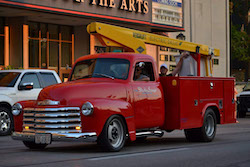
- Mechanic/crane truck packages — built around a service crane for field repair and heavy lifting
Each body type has different weight implications, access considerations, and compatibility with add-on equipment. Don’t pick the body after you’ve chosen everything else.
4. What add-on equipment do I need — and in what order?
Cranes, air compressors, generators, liftgates, ladder racks, tarp systems — the options are extensive. The key is thinking through how everything fits together spatially and functionally before anything gets bolted on.
A few things to ask:
- Does the crane need to swing clear of the cab or toolboxes?
- Where does the compressor mount, and how does it affect access to storage compartments?
- If there’s a liftgate, does it clear the hitch?
Ideally, this gets sorted out in the design phase — not during installation. If you’re working with Drake-Scruggs, our CAD design process maps all of this out before fabrication begins.
5. Steel, aluminum, or something else?
Material choice affects weight, durability, maintenance, and long-term cost. The short version:
- Steel is tougher and easier to repair in the field, but heavier and more susceptible to rust without proper treatment
- Aluminum is lighter — sometimes up to 50% less than steel — and naturally corrosion-resistant, which matters a lot in the Midwest where road salt is a winter reality, but it costs more upfront
- Fiberglass works well for light-duty service trucks where appearance and branding matter
There’s no universal right answer. It depends on your application, your environment, and how you think about total cost of ownership over the truck’s service life.
6. Who’s doing the upfit — and do they know your industry?
Not all upfitters are the same. Experience matters, especially if you’re in a specialized field like utilities, telecom, municipal service, or construction. An upfitter who has built dozens of trucks for crews like yours will know things that don’t show up in a catalog — how crews actually use their equipment, what common mistakes look like, and what the inspectors in your industry care about.
Ask how they handle the design process. Ask to see comparable builds they’ve done. Ask how they manage lead times and what happens if there’s a warranty issue after installation.
7. What does the total cost of ownership actually look like?
The sticker price on an upfit is only part of the story. Consider:
- Fuel economy — heavier bodies and equipment mean more fuel, year after year
- Maintenance costs — some materials and equipment cost less to own long-term even if the initial buy is higher
- Downtime risk — a poorly spec’d truck that’s always getting repaired or modified costs far more than the upfit difference
- Resale value — quality upfits from recognized manufacturers hold their value better
A good upfitter should be able to help you think through these tradeoffs, not just quote the cheapest option.
Ready to Talk Through Your Next Build?
Drake-Scruggs Equipment has been outfitting trucks for Illinois and Missouri customers since 1946. Whether you’re building a single work truck or spec’ing out a fleet, our team can walk you through every decision — from chassis selection to final equipment install.
Give us a call at 217-753-3871 or request a free quote to get started.